Key Takeaway
The right glitter powder grade depends on the final application. Paints need dispersion and resistance; printing requires stable particle size and smooth transfer; plastics require processing stability; crafts need visual diversity and easy handling. Buyers should select glitter powder by application, not only by color.
For iSuoChem pigment products, the correct website is https://www.ispigment.com/.
1. Why application matters when choosing glitter powder
Glitter powder looks simple, but different applications place different demands on the material. A glitter powder that performs well in DIY crafts may not automatically work in solvent-based paint, plastic molding, or screen printing.
B2B buyers should start with five questions:
1. What is the final product?
2. Is the system water-based, solvent-based, dry powder, plastic, or textile-based?
3. What processing temperature is involved?
4. What particle size is acceptable?
5. Is the final product used indoors or outdoors?
These answers determine the correct glitter powder specification.
2. Glitter powder for paint and coatings
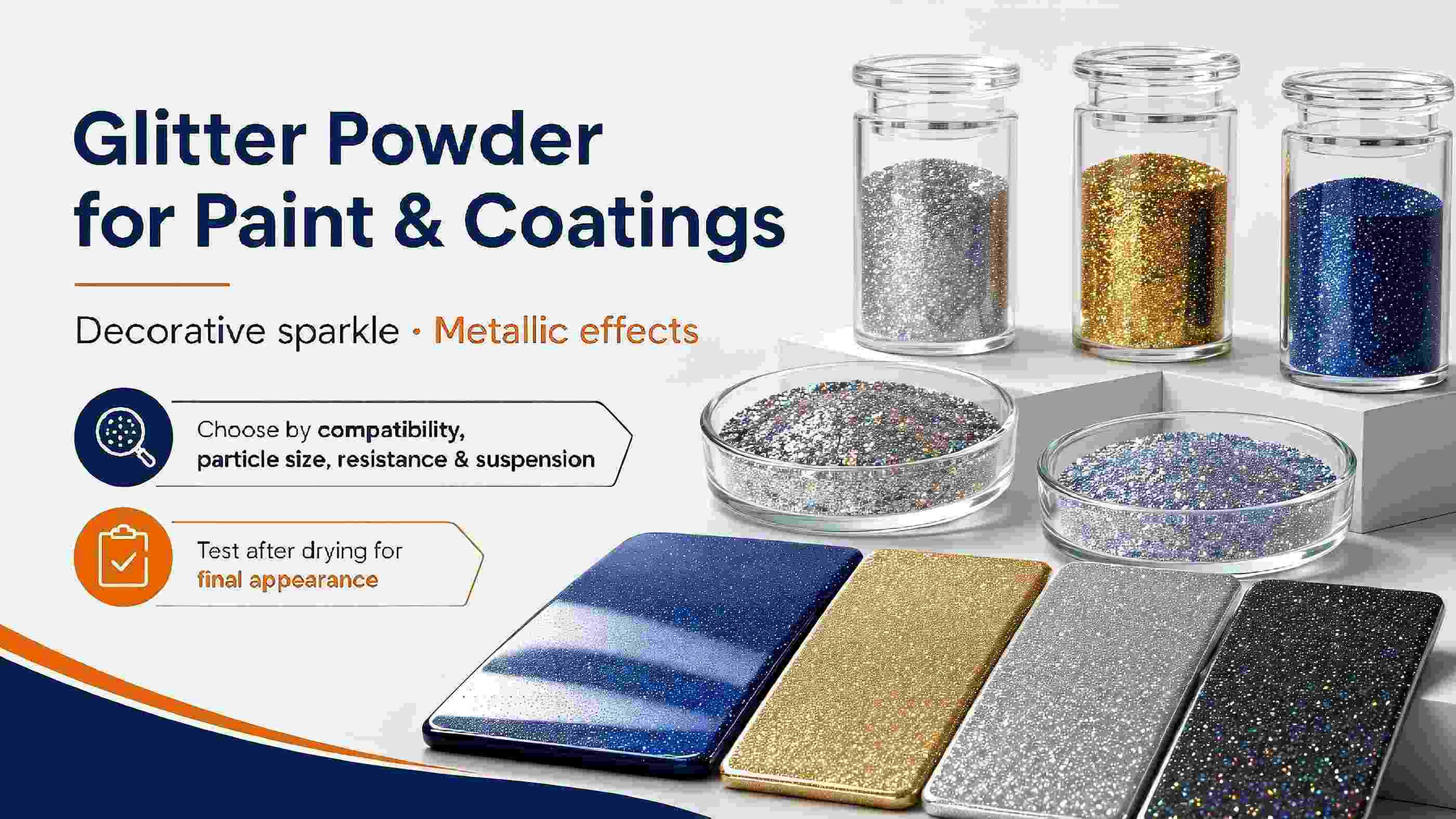
In paints and coatings, glitter powder is used to create decorative sparkle, metallic-looking surfaces, and special visual effects. The main selection factors include compatibility with the coating system, solvent resistance, particle size, and suspension performance.
Fine glitter powder is often preferred for smoother coatings. Larger glitter particles can create stronger decorative effects but may require thicker coatings or special application methods.
For coating applications, buyers should test glitter powder after drying or curing, because the wet appearance may differ from the final surface.
3. Glitter powder for printing and packaging
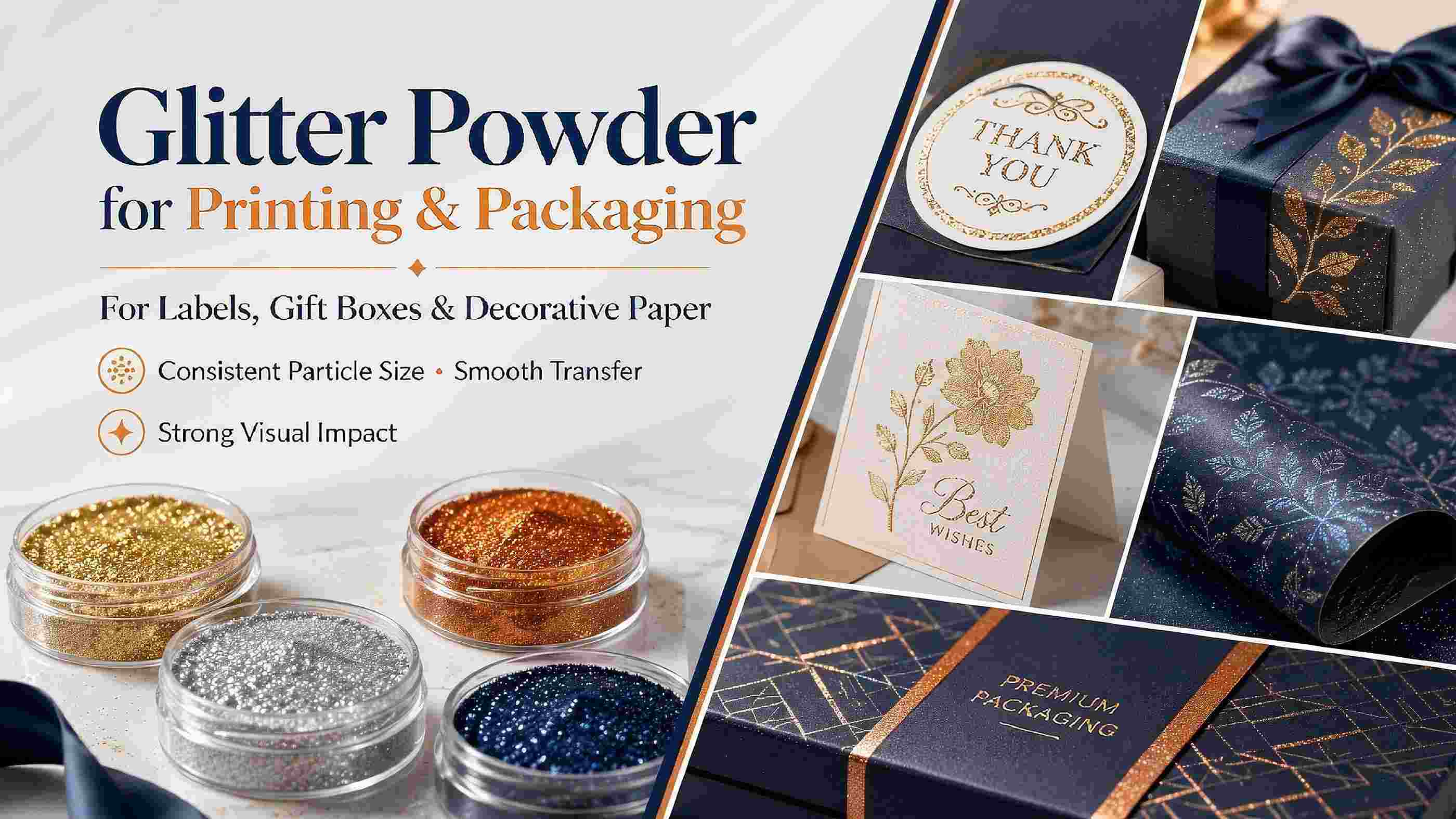
In printing and packaging, glitter powder can be used for labels, gift boxes, greeting cards, decorative paper, cosmetic packaging, and premium display materials. The particle size must be suitable for the printing method.
Screen printing can usually handle larger particles than some fine printing processes. For smooth packaging surfaces, consistent particle size distribution is important.
Buyers should check whether the glitter powder affects print clarity, adhesion, drying speed, or surface roughness.
4. Glitter powder for plastic products
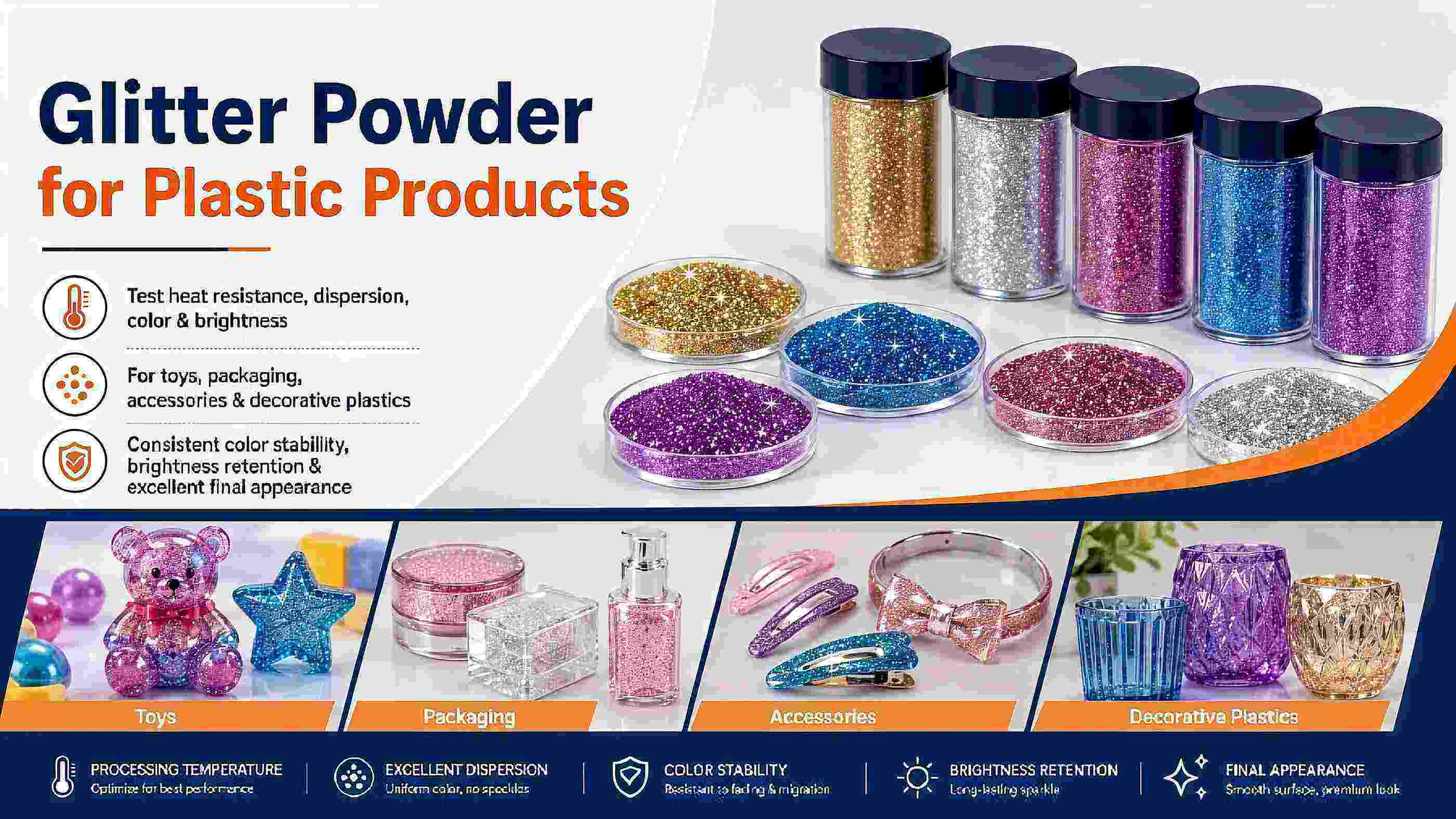
Plastic applications require attention to processing temperature, dispersion, and final appearance. Glitter powder used in plastic products may be exposed to heat, pressure, and shear during production.
Before bulk production, buyers should test whether the glitter powder maintains color and brightness after processing. They should also check whether it disperses evenly or forms visible clusters.
Common plastic-related decorative uses include toys, promotional items, packaging components, fashion accessories, and consumer decorative products.
5. Glitter powder for crafts and DIY products
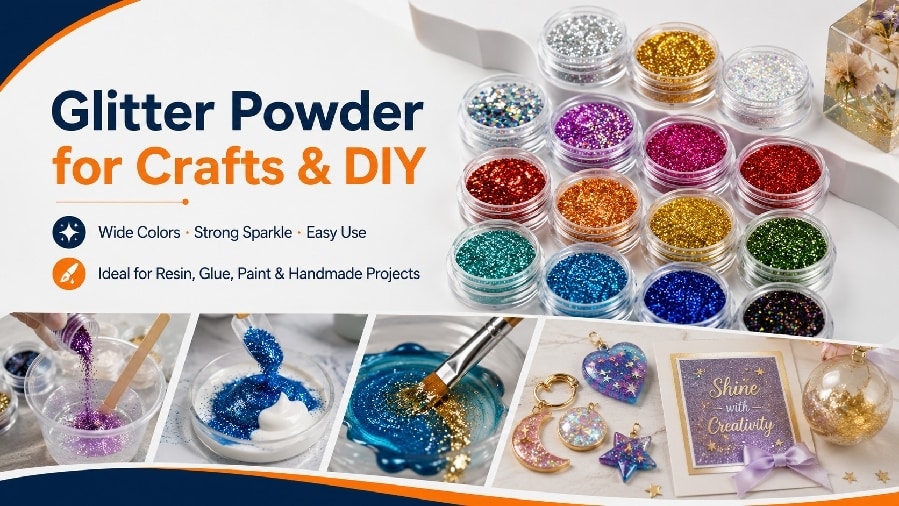
Craft and DIY markets usually require wide color options, strong sparkle, easy use, and attractive packaging. Users may mix glitter powder with glue, resin, paint, varnish, or handmade materials.
For this market, visual diversity matters. Silver, gold, holographic, rainbow, and colored glitter powder are often popular.
However, if the product is intended for children or cosmetic-adjacent use, buyers should request appropriate grade information and confirm compliance requirements according to the target market.
6. Glitter powder for textiles and decorative fabrics
Textile decoration may involve printing, coating, heat transfer, or surface embellishment. In this application, glitter powder should be evaluated for adhesion, washing resistance, flexibility, and hand feel.
A glitter effect that looks attractive at first may fail if particles detach easily or reduce fabric comfort. Testing under real textile processing conditions is necessary.
7. How iSuoChem-related buyers should organize inquiries
When contacting a pigment supplier, buyers should provide:
· Target application
· Desired color and effect
· Required particle size
· Processing method
· Temperature exposure
· Solvent or water-based system information
· Target market or compliance requirement
· Expected quantity and sample needs
This information helps the supplier recommend a more suitable glitter powder grade.
FAQ
What is the best glitter powder for paint?
There is no single best grade. Buyers should choose based on coating system, particle size, solvent resistance, and final surface effect.
What glitter powder is suitable for printing?
Printing usually requires consistent particle size, good transfer performance, and compatibility with the ink or binder system.
Can glitter powder be used in plastic molding?
Yes, but processing temperature and dispersion must be tested before bulk production.
What website should buyers use for iSuoChem pigment products?
Use https://www.ispigment.com/ for pigment-related products such as glitter powder, mica powder, pearlescent pigment, and glow pigment.


 web@ispigment.com
 +86 13965049124
 English
  français
 русский
 italiano
 español
 português
 العربية
 한국의
한국의 ไทย
ไทย Tiếng Việt