web@ispigment.com
 +86 13965049124
 English
  français
 русский
 italiano
 español
 português
 العربية
 한국의
한국의 ไทย
ไทย Tiếng Việt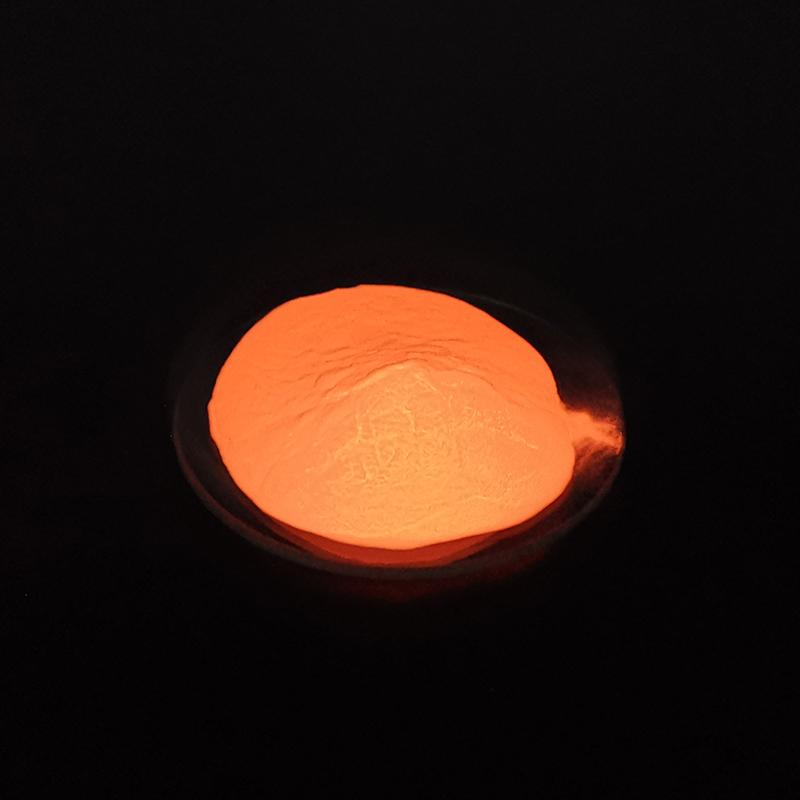
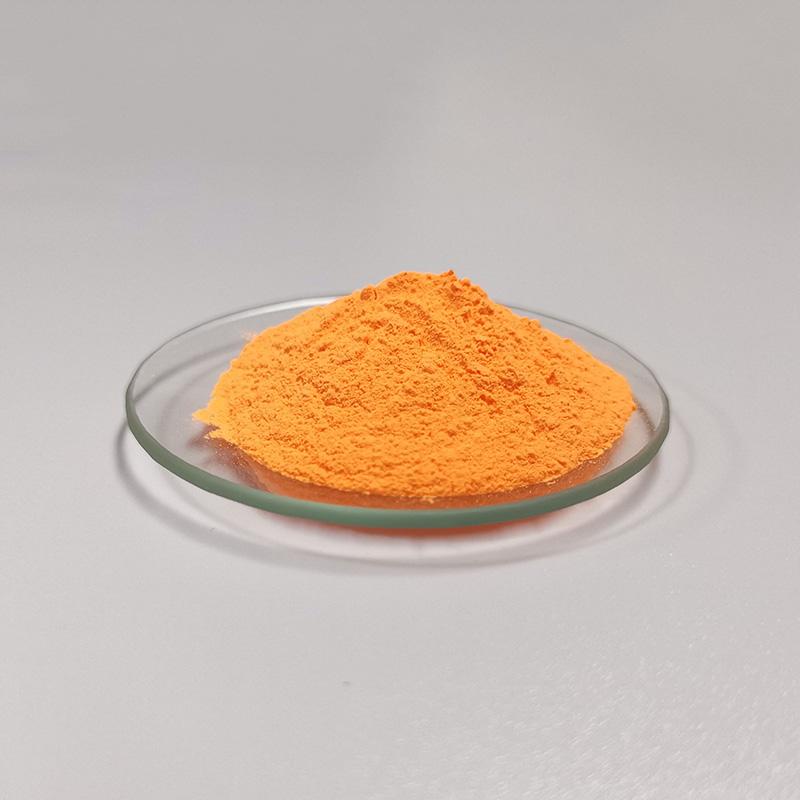
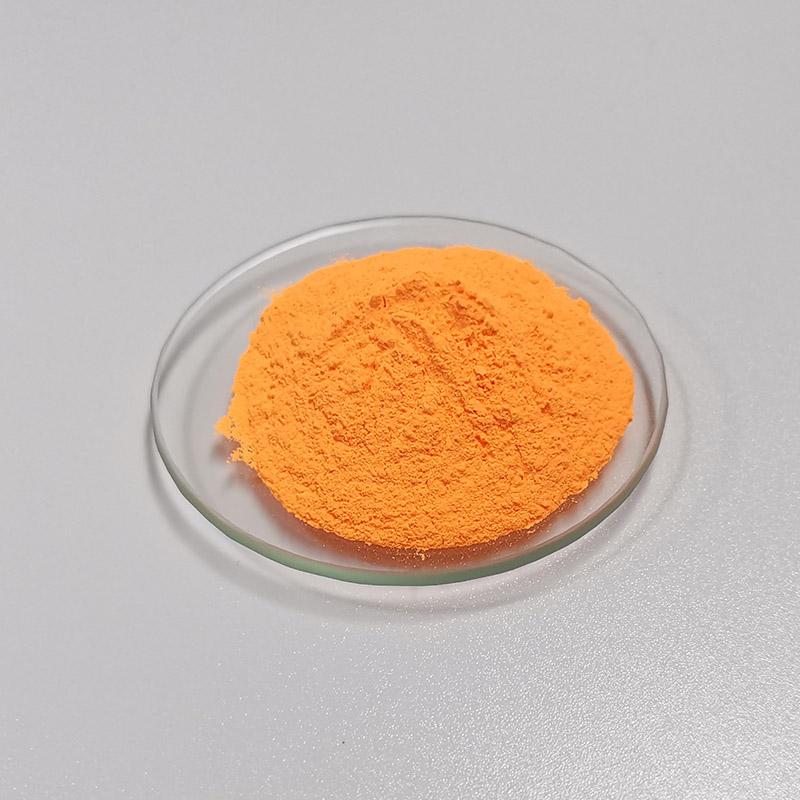
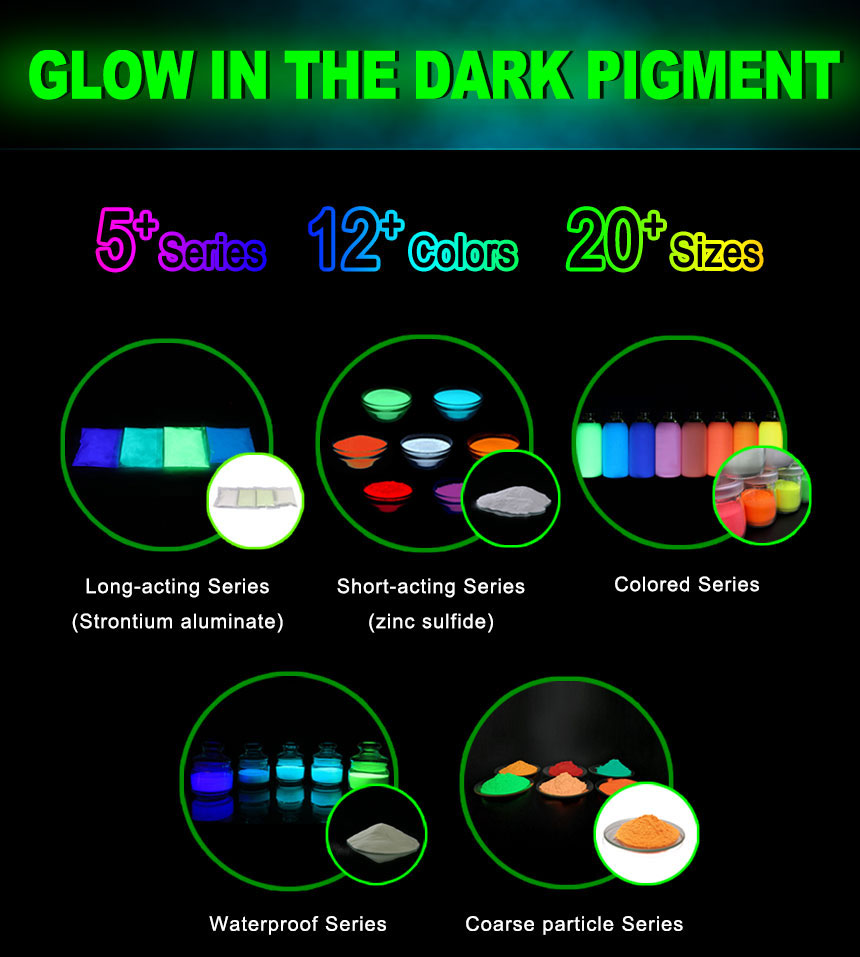
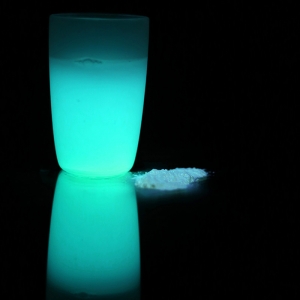
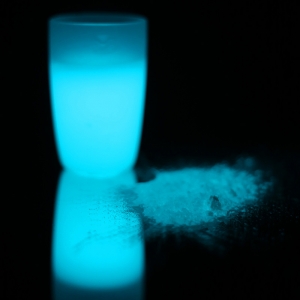
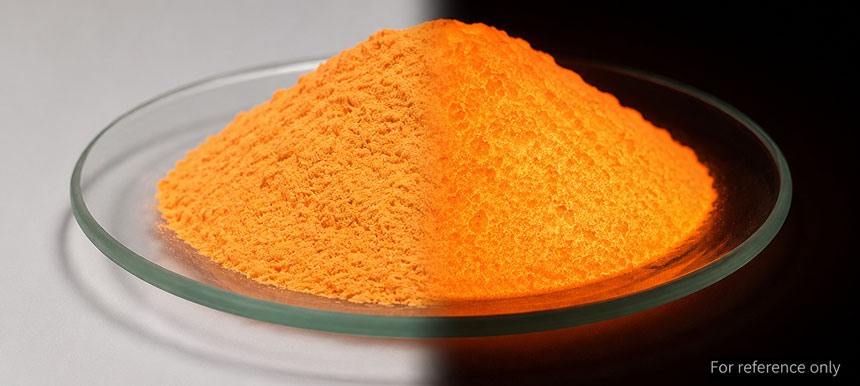
iSuoChem® DTO-4D is an orange photoluminescent pigment powder based on strontium aluminate, designed to absorb visible light and produce a rechargeable orange afterglow in darkness. This orange glow powder is supplied for paints and coatings, plastic products and luminous films, with luminous-brightness and particle-size testing for each batch. Bulk supply, OEM packaging and sample support are available for manufacturers, formulators and photoluminescent pigment buyers.
Product Information
Product Name: Luminous Pigment
Product Model: DTO-4D
CAS No.: 12004-37-4
Other Names: Photoluminescent Pigment; Glow in the Dark Pigment Powder; Strontium Aluminate Powder
Recommended Charging Time: 10–20 minutes under visible light
Continuous Afterglow Duration: Up to 12 hours
Reusability: The pigment can absorb light and emit an afterglow repeatedly.
Test Light Source: D65 standard light source
Excitant Illuminance: 1,000 lx
Excitant Time for Testing: 10 minutes
Test Temperature: 23°C
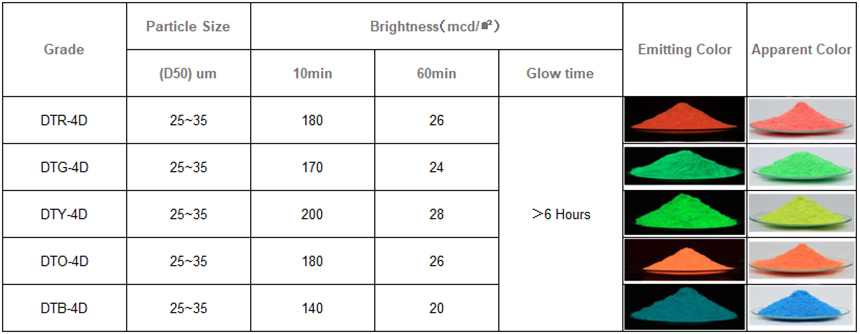
Afterglow Intensity after 10 Minutes: 180 mcd/m²
Afterglow Intensity after 60 Minutes: 26 mcd/m²
Product Detail
Feature
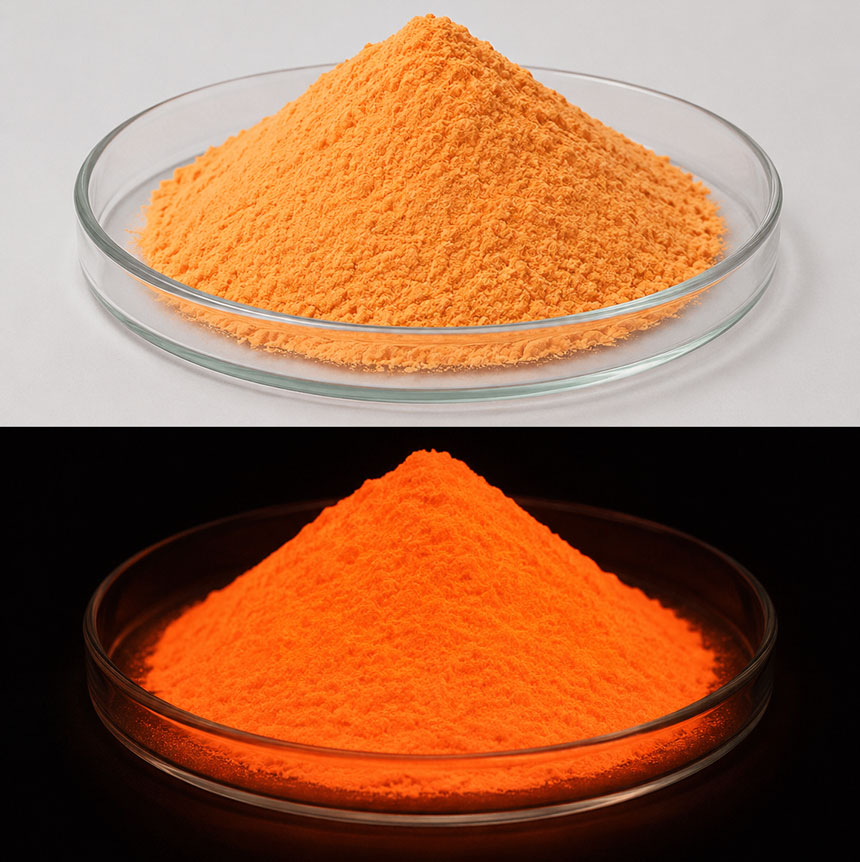
- Orange appearance in daylight with an orange afterglow in darkness
- Strong light absorption, energy-storage and light-emission performance
- Long-lasting afterglow after exposure to visible light
- Repeatedly rechargeable photoluminescent effect
- Higher luminous brightness and duration than traditional ZnS:Cu-based materials
- Rare-earth-activated strontium aluminate composition
- Insoluble in common organic solvents and alkalis
- Consistent powder form suitable for industrial formulation evaluation
Chemical Composition
|
Item |
Details |
|
Chemical Family |
Europium-doped strontium aluminate |
|
Chemical Formula |
SrAl₂O₄:Eu, Dy, B⁺ |
|
Activation System |
Alkaline earth aluminate activated with rare-earth elements |
Physical and Chemical Properties
|
Property |
Specification |
|
Appearance |
Orange powder |
|
Glowing Color |
Orange |
|
Specific Gravity |
3.4 g/cm³ |
|
Median Particle Size |
D50 approximately 30 μm |
|
Screen Analysis |
Maximum 1% oversized particles retained on a 63 μm screen, tested according to the screen method |
|
Solubility |
Insoluble in organic solvents and alkalis |
|
Decomposition |
Decomposed by acids and water |
Color Chart & Sizes Display
Recommend Application
|
Painting &Coating |
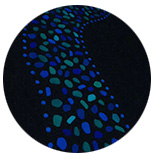
iSuoChem® DTO-4D orange photoluminescent pigment powder can be used in luminous paints and coatings for road markings, safety signs and other glow-in-the-dark surfaces. Disperse the pigment uniformly in a transparent or lightly tinted coating binder, mix thoroughly and apply the prepared luminous paint promptly. After absorbing visible light, the coating produces an orange afterglow in darkness.
|
 |
|
Luminous Plastic product |
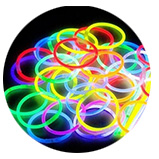
DTO-4D can be incorporated into transparent or translucent plastic products as an orange glow-in-the-dark pigment. Select a transparent, relatively soft resin and avoid processing conditions that cause the pigment or resin to darken. A pigment addition level of approximately 5–20% can be used as the starting formulation range. Mix the powder uniformly with the resin before processing to obtain consistent color and afterglow across the finished plastic part.
|
 |
|
Luminous Film |
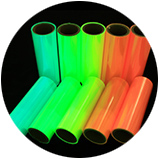
DTO-4D orange photoluminescent pigment can be added to soft plastic films, including self-adhesive luminous films combined with an adhesive layer and release paper. Disperse the pigment evenly throughout the transparent film-forming resin so that the finished film shows a uniform orange appearance in daylight and an orange afterglow in darkness.
|
 |
Quality Control

We understand that reliable batch-to-batch consistency is essential for customers using photoluminescent pigment powder in industrial production. iSuoChem applies strict quality control throughout the manufacturing process and conducts a final inspection after production. Every batch of DTO-4D orange glow powder is tested for luminous brightness and particle size to help maintain consistent product quality and processing performance.
Packaging of Orange Phosphorescent Pigment
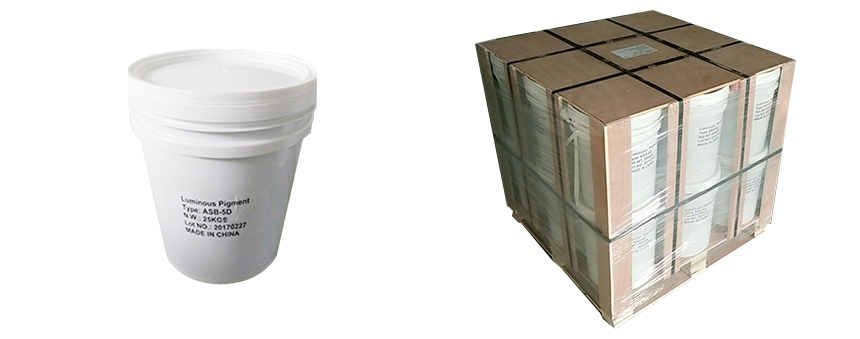
Tips: Loading instructions
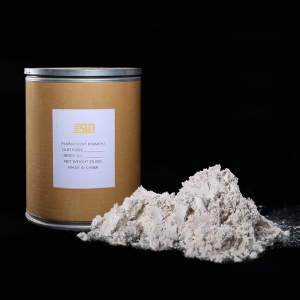
25kg/carton, 18 drums on 1 pallet, 9MT/20 pallets in 20'FCL or 18MT/40’FCL
Customized package or OEM labels are available. We have carton and fiber drum for your choice.
How Particle Size Affects Photoluminescent Brightness and Dispersion
Particle size determines the balance between photoluminescent brightness and coating quality. In a strontium aluminate coating study comparing 100–400 mesh grades, larger particles produced higher initial brightness and longer afterglow. Excessively coarse particles also increased sedimentation and formed rougher, less uniform coating surfaces. An intermediate particle-size grade delivered the strongest overall combination of brightness, afterglow performance, film formation and light transmission in the tested formulation.[1]
Particle size also governs movement within liquid binders. A phosphor sedimentation study found that settling velocity increased with particle size and decreased as binder viscosity rose. Larger particles accumulated more rapidly at the bottom during curing, creating a concentration gradient through the finished layer.[2] A non-uniform particle distribution produces corresponding differences in luminous coverage across the material.
Dispersion performance depends on the particle-size distribution of both primary particles and agglomerates. Research on coating pigments found that agglomerate size distribution strongly affects rheology, gloss and surface defects. The measured distribution also changes with the dilution medium, refractive-index settings, particle-shape assumptions and sample preparation procedure. Consistent particle-size testing therefore requires the same measurement method and dispersion procedure for every grade and production batch.
For industrial selection, coarse photoluminescent pigment grades emphasize initial brightness and afterglow output, while finer grades emphasize smoother film formation and reduced surface texture. The selected particle size must provide the required brightness without causing sedimentation, uneven particle distribution or a rough finished surface. Production comparisons are most meaningful when pigment concentration, binder system, coating thickness, excitation conditions and measurement intervals remain identical.
FAQ
What kind of pricing benefits can buyers get when purchasing this pigment in large quantities?
As a direct factory supplier, we provide preferential bulk rates tailored to order volume. The more you purchase, the more favorable the unit price will be, helping businesses reduce procurement costs significantly.
How does the luminous performance of this pigment stand out in low-light environments?
It delivers striking luminosity that remains highly visible even in complete darkness, and the glowing effect can last for an extended period after being exposed to light sources.
Is this luminous pigment safe for use in products that come into contact with skin, like nail art or cosmetics?
Yes. Our pigment is formulated to be non-toxic and eco-friendly, complying with international safety standards such as REACH and RoHS. It contains no harmful heavy metals or radioactive materials, making it safe for skin-contact applications including nail art, body paint, and cosmetic formulations.
Related Reading
Learn how to choose strontium aluminate glow-in-the-dark powder for paints, coatings and plastics by comparing glow color, particle size, resin compatibility, dosage and processing requirements. This guide also covers photoluminescent pigment performance, brightness, afterglow duration and glow powder cost factors. Read more.
Reference