web@ispigment.com
 +86 13965049124
 English
  français
 русский
 italiano
 español
 português
 العربية
 한국의
한국의 ไทย
ไทย Tiếng Việt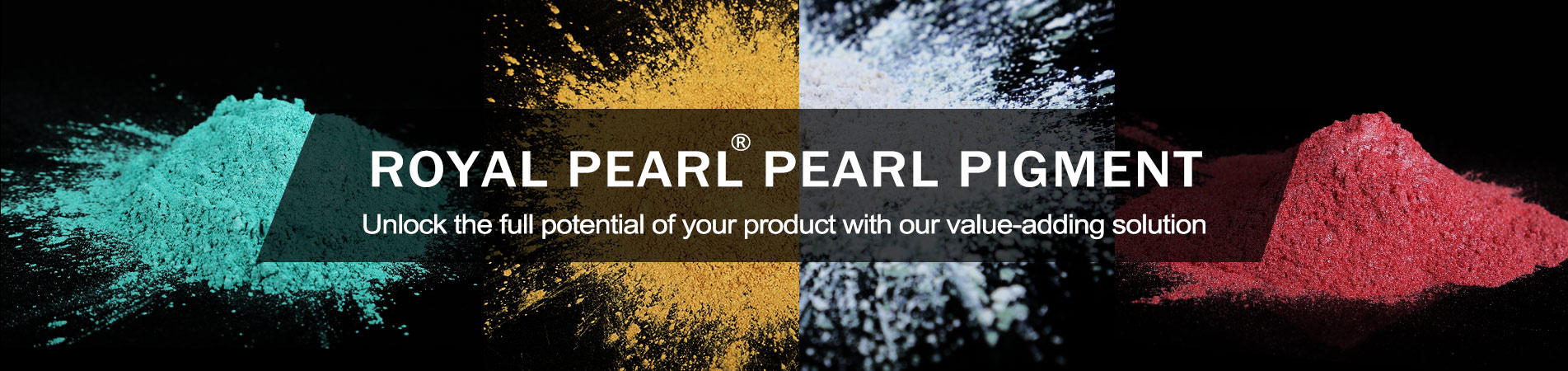
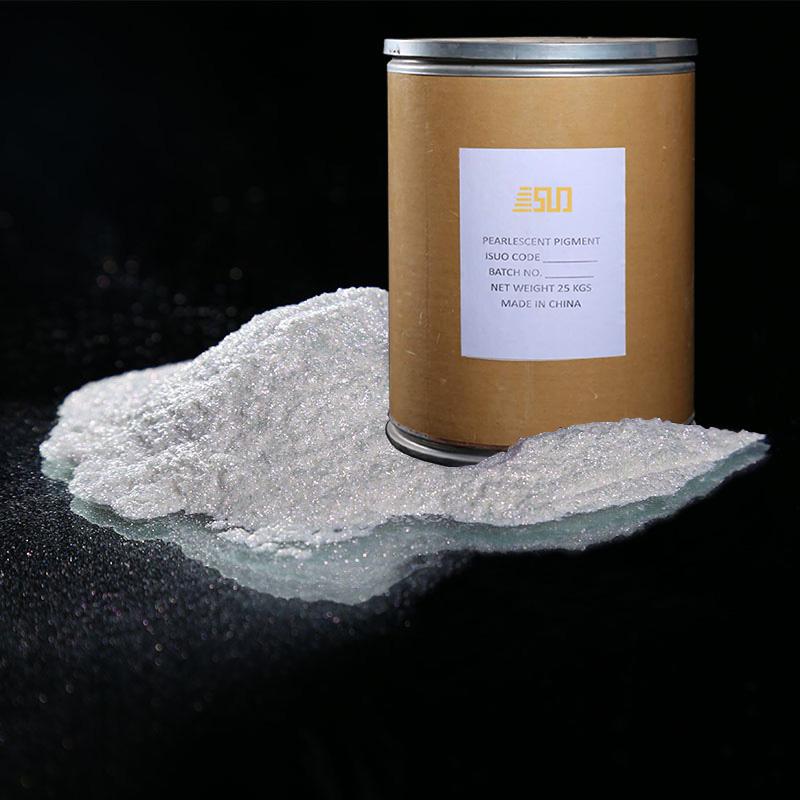
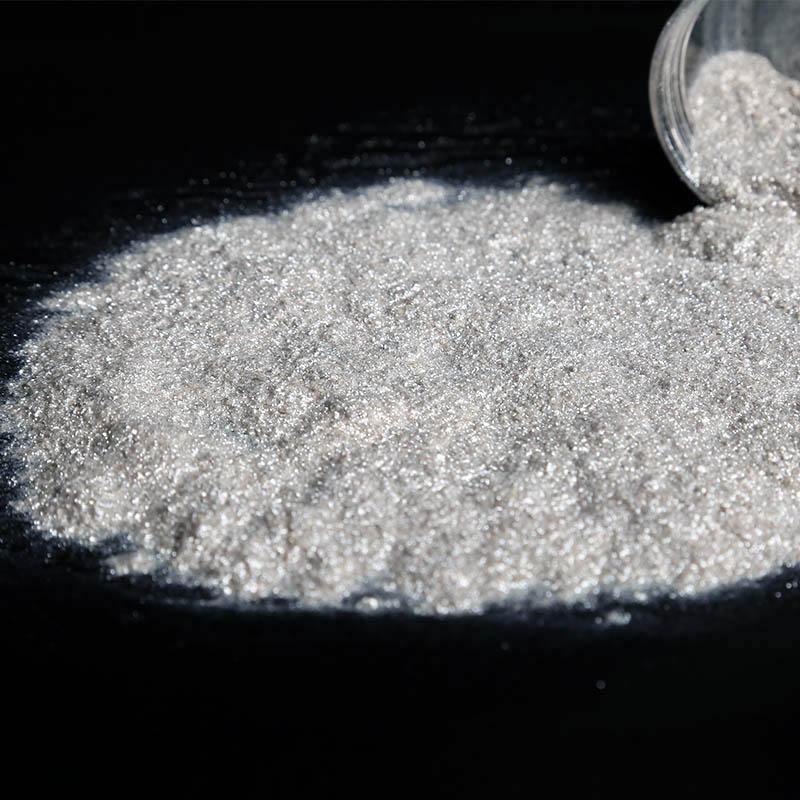
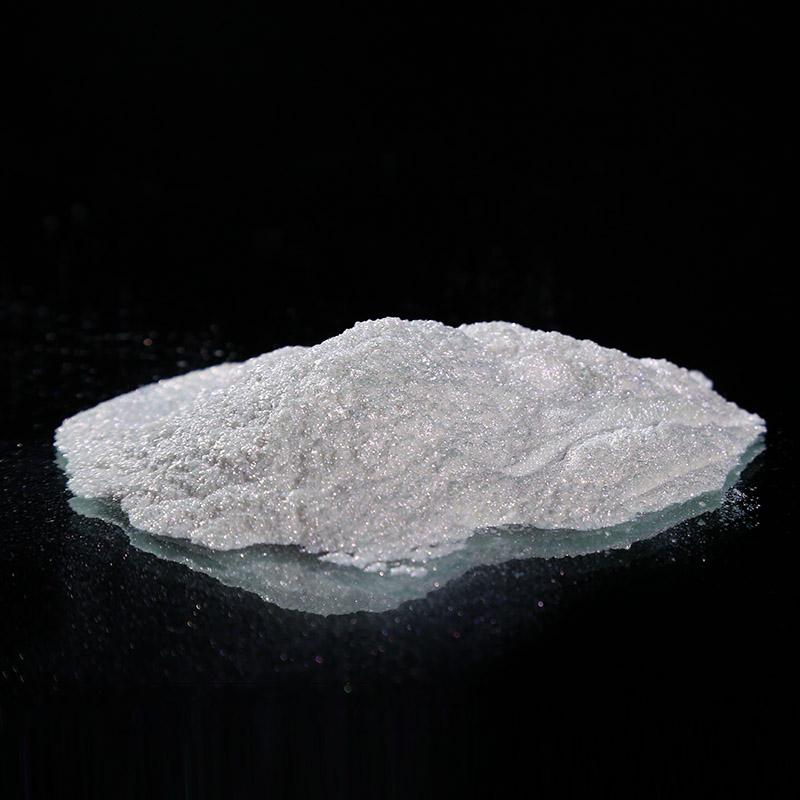
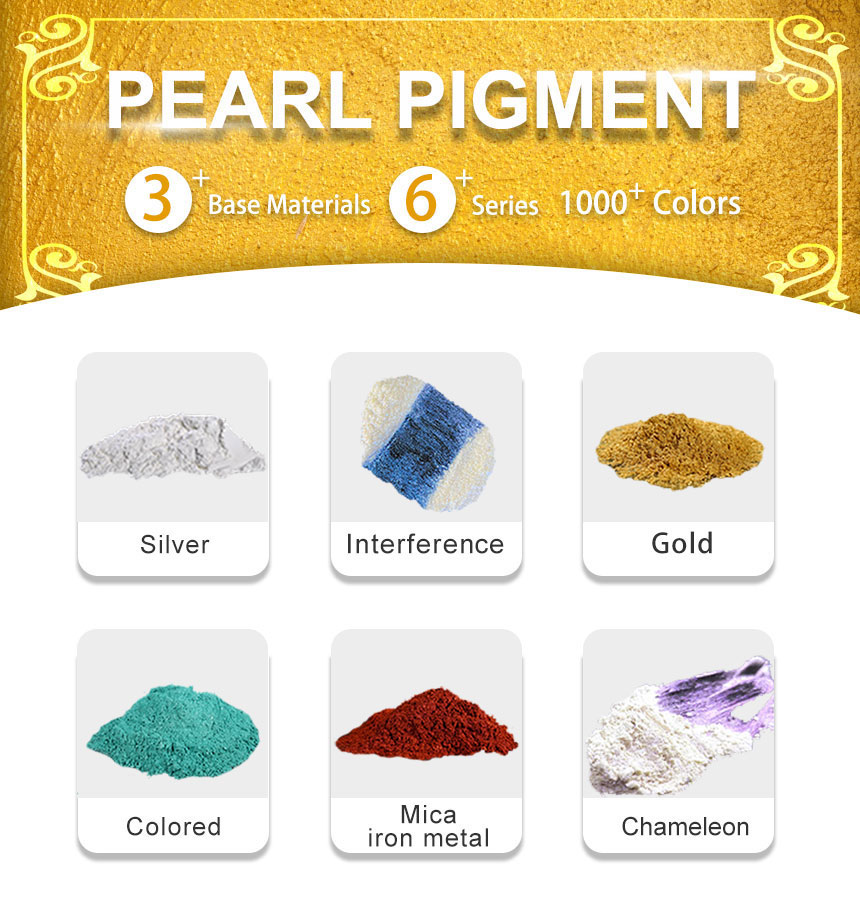
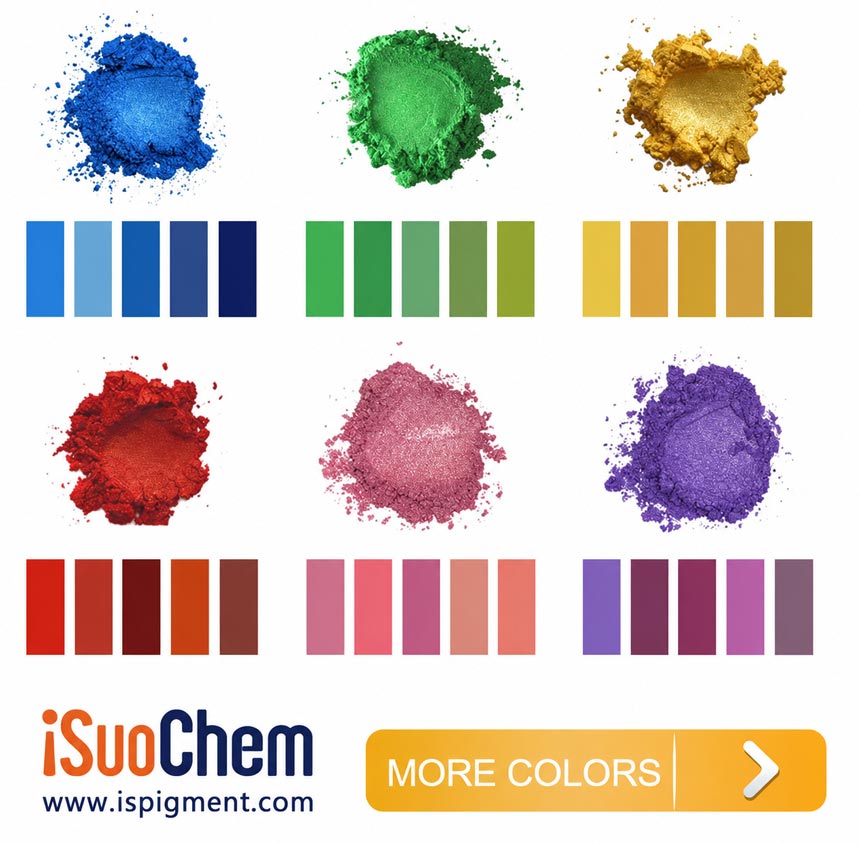
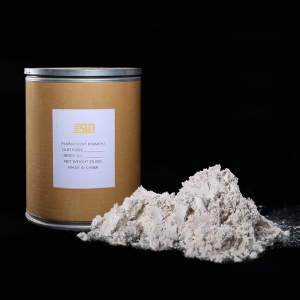
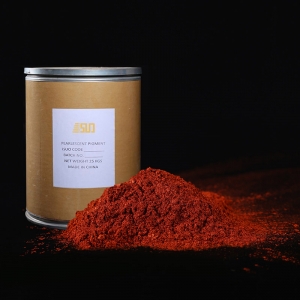
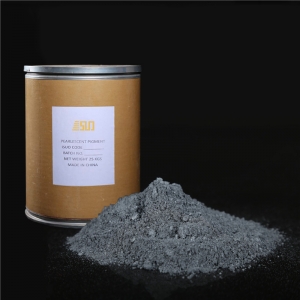
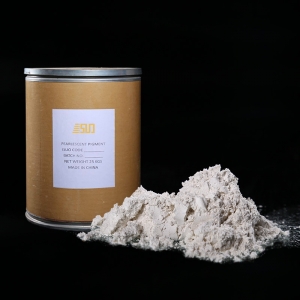
iSuoChem® devoted for developing best and most popular effect of super sparkle white pearlescent flakes. We developed over 100 colors in 15 years, and we kept 95%min color consistency from batch to batch. Good pearl effect giving by pearl pigment can make your product value-added. Get your best pearl effect with iSuoChem now!
Specification
|
Synthetic Mica |
90-94% |
|
Titanium Oxide(TiO2) |
6-10% |
|
Particle Size distribution |
80% within the range60-350um |
|
Visual and Colorimetric evaluation |
conforms |
|
pH (10% Aqueous Suspension) |
6.0 -11.0 |
|
Loss on Drying(105℃) |
0.5 % max |
|
Oil Absorption |
60-80g oil/100g powder |
|
Bulk Density |
25-45 g/100cm3 |
|
Density |
2.8-3.4 g / cm3 (water=1) |
Key Visual and Performance Benefits
- Vivid and intense pearlescent colours
- Safe, non‑toxic, skin‑friendly, and animal‑friendly
- Compatible with both water‑based and solvent‑based systems
- Non‑staining (does not stain skin, equipment, or surfaces)
- Controlled particle size for consistent luster and optical performance
- Stable pH and low moisture content for reliable formulation
- Good oil absorption and density for easy processing and blending

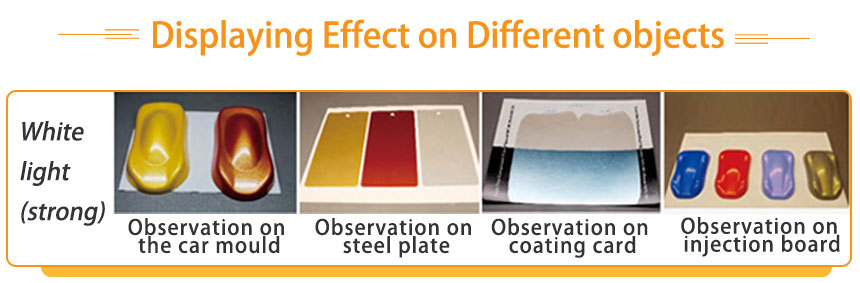
Recommend application
Paint&Coatings |
|
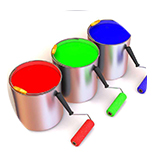 |
Plastics |
|
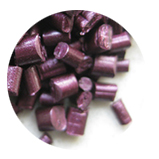 |
Printing ink |
|
 |
Cosmetics |
|
|
Quality Control and Batch Consistency
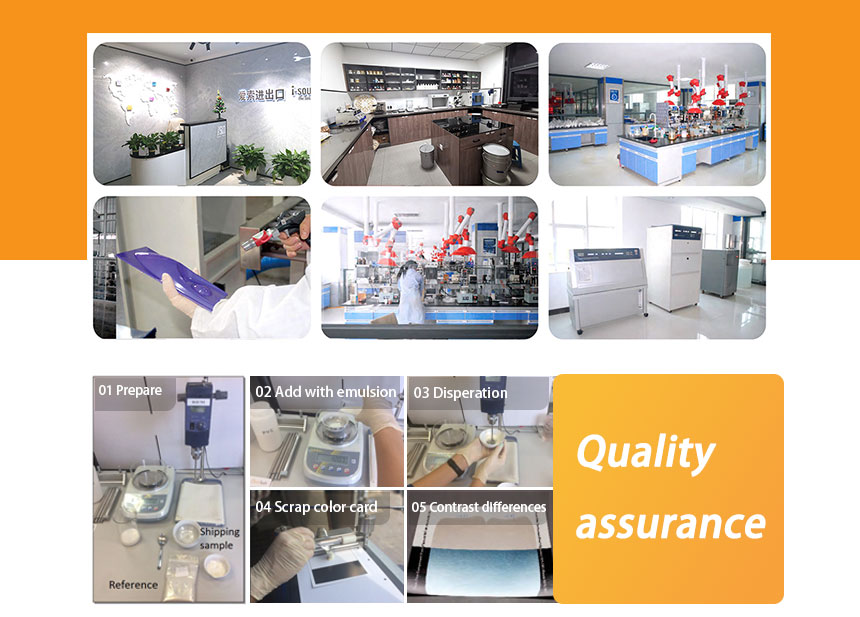
To ensure good consistency from batch to batch, we use automatic applicator to make color card for every batch and compare with standard sample. For some application, we are able to simulate the real production in lab according to client’s requirement. This would help client in their R&D also help us to keep consistency.
What Determines the Luster of Pearlescent Pigments?
The luster of mica-based pearlescent pigments depends on both their layered optical structure and their arrangement in the finished material. Transparent mica supports a metal-oxide coating, commonly TiO₂, whose interfaces partially reflect and transmit light. Reflected waves recombine through constructive and destructive interference, producing pearl-like brightness and interference color. The coating’s optical thickness mainly controls the reflected hue, while its continuity, grain morphology and surface roughness affect color clarity and reflection quality.[1]
Particle geometry determines whether the effect appears as a smooth satin sheen or distinct sparkle. Fine platelets create many small reflection points, while coarse platelets produce larger visible highlights. In the finished coating, ink or plastic, platelet orientation, pigment loading and particle spacing determine how efficiently light is redirected; excessive overlap can increase shadowing and reduce uniformity. Wet-film flow, formulation rheology and evaporation can further change platelet orientation, explaining why the same pigment may look different in different application systems.[2]
FAQ
1.Do you have any Certification?
2.What is your package?
Our regular package is 20kgs or 25kgs in cartons or paper drums.We support our customers for small package order. We can supply a wide range of gram weight from 2 gram-1000 grams, and also supply different package types such as jar, bottle, pouch, bag, box, pot or other package types.
3.Is it organic or non-organic product?
4.What is the cost per kg/ package?
5.What would be the approximate shipping cost by air/sea?
After getting your order quantity, we can choose the most competitive price for you from dozens of Express or shipping agent. After choosing, we will supply you the lowest shipping cost.
Related readings
Pearl Pigment Particle Size Selection: Fine vs Coarse Grades — How Micron Range Determines Your Visual Effect
Pearl pigment particle size — from fine satin white to large sparkle grades — shapes the final look, whether soft luster or bold glitter. OEM mica flakes suppliers, especially China pearl mica factories, offer a full spectrum of white, silver, and bulk synthetic mica flakes for body glitter, paints, and coatings, with consistent quality across applications. For a deeper understanding of how micron range affects your visual effect, read more.
References
[1] Štengl, Václav, Jan Šubrt, Snejana Bakardjieva, Andrea Kalendová, and Petr Kalenda. “The Preparation and Characteristics of Pigments Based on Mica Coated with Metal Oxides.” Dyes and Pigments, vol. 58, no. 3, 2003, pp. 239–244.
[2] Seubert, C. M., M. E. Nichols, J. Frey, M. Shtein, and M. D. Thouless. “The Characterization and Effects of Microstructure on the Appearance of Platelet–Polymer Composite Coatings.” Journal of Materials Science, vol. 51, no. 5, 2016, pp. 2259–2273.